Nitrosamine & NDSRI Control

Nitrosamine & NDSRI Control

We combine chemistry, analytical science and process understanding to identify, investigate and control nitrosamine risk, delivering the evidence needed for a robust, regulator-ready control strategy.

Nitrosamine Risk Assessment & Control
Quick filter:

Most nitrosamine work is fragmented across vendors: one for the risk assessment, another for the standard, another for the method, another for the fix. Against a regulatory deadline, that coordination is the real risk.

CatSci brings the entire workflow together: digital risk assessment through our Data Factory, forced nitrosation studies that test propensity to nitroslate, bespoke synthesis of nitrosamine and NDSRI reference standards, trace-level analytical testing that goes beyond simply confirming whether NDMA is present, as well as the practical bench work and the process chemistry to design the impurity out.

Chemistry, analytical science, process development, and regulatory expertise, working together to deliver one integrated control strategy.

An Integrated Workflow for Nitrosamine Control
Identify
Evaluate synthetic routes, raw materials, excipients and manufacturing processes to identify potential nitrosamine and NDSRI risks before they become development challenges.
Investigate
Combine expert risk assessment with in silico tools to evaluate synthetic routes, raw materials, excipients and manufacturing processes, identifying potential nitrosamine and NDSRI formation risks before they become development challenges.
Detect
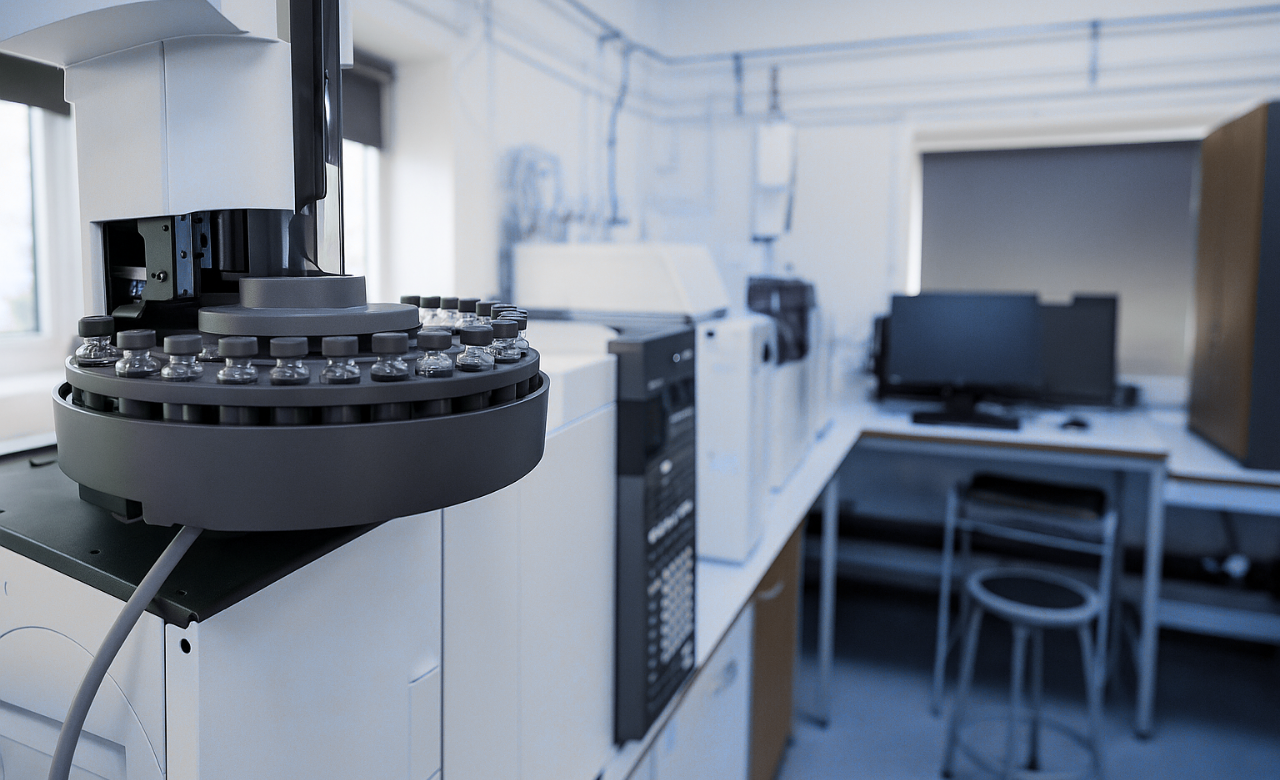
Ultra-sensitive LC-MS, GC-MS, MS/MS and HRMS methods to detect and quantify nitrosamines at trace levels across APIs, intermediates and finished drug products.
Understand
Identify unknown impurities through high-resolution mass spectrometry, structural elucidation, preparative isolation and custom reference standard synthesis.
Control
Develop scientifically justified mitigation strategies through fate-and-purge studies, formulation assessment, stability investigations and process optimisation.
Support
Deliver complete, regulator-ready CMC evidence packages aligned with FDA, EMA, EDQM and ICH expectations.
Our Expertise
Process Chemistry
Understand formation pathways, optimise reaction conditions and develop routes that minimise nitrosamine formation.
Forced Nitrosolyation Studies
Rather than waiting for a theoretical alert to become a filing risk, we experimentally test whether your API or impurities can form a nitrosamine under enabling conditions, so you're working from evidence rather than prediction.
Analytical Development
Ultra-sensitive methods, HRMS investigations and robust validation strategies for trace-level detection.
Organic Synthesis
Custom synthesis of nitrosamine and NDSRI reference standards for confident identification, quantification and method validation.
Purification & Separation
Preparative isolation and enrichment of unknown impurities to enable structural confirmation and deeper investigation.
Formulation & Stability
Assess excipient contributions, storage conditions and formulation factors influencing nitrosamine formation throughout shelf life.
Regulatory CMC
Generate scientifically justified, ICH M7-aligned risk assessments, control strategies and lifecycle documentation ready for regulatory review.

CatSci Data Factory

Every nitrosamine assessment is supported by the CatSci Data Factory, our connected data platform that links raw instrument data, experiment records, and process history into one structured, traceable report.

Rather than a static risk register or a standalone spreadsheet, our digital risk assessments pull directly from live, structured data across chemistry, analytics and manufacturing — so the risk picture reflects your actual process from day one, not just a theoretical starting point.

Connected, not siloed: Raw data, metadata and lineage are held in one place, rather than scattered across instruments, notebooks and individual analysts.

Structured for reuse: Outputs are formatted and ready to feed straight into your systems, tech transfer packs or ongoing lifecycle monitoring.

Traceable and audit-ready: FAIR-aligned, with full data lineage to support regulatory scrutiny at any stage of the product lifecycle.

What You Can Achieve
Earlier Risk Identification
Identify potential nitrosamine risks before they become costly development or manufacturing issues.
Regulatory Confidence
Generate scientifically justified evidence packages aligned with global regulatory expectations.
Product-Specific Understanding
Move beyond theoretical alerts with experimental evidence tailored to your molecule.
Reduced Development Delays
Resolve complex nitrosamine questions quickly through integrated scientific expertise.
Robust Control Strategies
Implement practical mitigation strategies supported by chemistry, analytics and process understanding.
Lifecycle Confidence
Maintain confidence from early development through commercial manufacture and ongoing lifecycle management.
1 / 1
Nitrosamine risk cannot be solved through analytical testing alone. It requires connected scientific understanding across chemistry, process development, analytical science and regulatory CMC to build a robust, defensible control strategy. From early discovery to regulatory submission, our mission is to provide the analytical insight that accelerates our customers’ success.
Sam Whitmarsh
Technical Director, Analytical Science & Digital Transformation

Specialist Technologies

High Resolution Mass Spectrometry
Accurate mass determination and structural elucidation of known and unknown nitrosamine impurities.
LC-MS & GC-MS
Highly-sensitive targeted methods for trace-level quantification across diverse sample matrices.
Preparative Chromatography
Isolation and enrichment of impurities to support structural confirmation and reference standard development.
Reference Standard Synthesis
Custom synthesis of NDSRIs and product-specific nitrosamines for accurate quantification and regulatory confidence.
Nitrosation Risk Screening
Forced nitrosation studies under enabling conditions to determine whether a nitrosamine can form from a given API, intermediate or impurity. Generates the empirical formation evidence needed to support risk assessment and control strategy decisions. Approach based on Ashworth et al., Organic Process Research & Development, 2023. (https://pubs.acs.org/doi/10.1021/acs.oprd.3c00084).
Fate & Purge Studies
Understand impurity behaviour throughout manufacturing to develop robust and defensible control strategies.
Regulatory Method Validation
ICH Q14/Q2(R2)-aligned analytical development and validation supporting global submissions.

Frequently Asked Questions

Why are NDSRIs different from traditional nitrosamines?

Unlike classical nitrosamines, NDSRIs are unique to an individual API, intermediate or degradant. They frequently require bespoke analytical methods, structural investigation and custom reference standards.

Is analytical testing alone enough?

No. Modern regulatory expectations require a connected scientific understanding of formation pathways, root cause, analytical evidence and long-term control. Testing is only one part of a complete risk management strategy.

Can CatSci investigate unknown nitrosamines?

Yes. Our integrated workflow combines reaction studies, HRMS, preparative isolation, structural elucidation and custom synthesis to investigate both known and novel nitrosamine impurities.

Can you develop custom reference standards?

Yes. Where commercial standards are unavailable, our chemistry teams can synthesise product-specific nitrosamine and NDSRI reference materials to support identification, quantification and method validation.

How early should nitrosamine risk be assessed?

Ideally during route selection or early process development, when mitigation strategies can be built into the process rather than introduced later. Assessing nitrosamine risk during route selection and process development enables mitigation strategies to be built into the process before they become regulator or manufacturing challenges.

Book a Consultation

Speak directly with our scientists about your development challenges and explore how we can support your programme.